Why Charleston Homes Need More Than Standard Gutters
Living in Charleston, Johns Island, and Mount Pleasant offers unique beauty: saltwater breezes, historic oak-lined streets, and marsh views that draw residents from across the country. Yet every summer, that same beauty comes with a harsh reality. Torrential downpours arrive with little warning, dumping inches of rain in a single afternoon. Hurricane season stretches from June through November, bringing sustained storms that test every home’s defenses. The Lowcountry’s flat topography compounds the challenge. Water doesn’t flow downhill naturally here; it pools, it lingers, and it finds its way into foundations, crawl spaces, and yards.
Standard, builder-grade gutters were never engineered for these conditions. They fail when put to the test by Lowcountry storms, overflowing within minutes and leaving homeowners scrambling. The solution isn’t a simple repair or a single upgrade. Protecting your home requires a comprehensive approach: high-capacity gutters designed to handle extreme rainfall, drainage solutions that manage water movement across your entire property, and ongoing maintenance that keeps the system functioning year after year. This integrated strategy is the only way to safeguard your investment against the relentless combination of heavy rain, high humidity, and flat terrain that defines the Charleston area.
How Overflow Leads to Structural Problems
The mechanics of gutter overflow are straightforward but often misunderstood. A typical Charleston roof measuring 2,000 square feet can receive more than 3,000 gallons of water during a two-hour summer downpour. Standard five-inch gutters, the kind installed on most new construction, drain approximately 600 gallons per hour under ideal conditions. The math tells the story: your roof is collecting water five times faster than your gutters can move it away. Add in any debris, a slight sag in the gutter line, or a single clogged downspout, and that ratio gets even worse.
High-capacity gutter options change the equation entirely. Six-inch and seven-inch systems, paired with properly sized and positioned downspouts, can move 1,200 to 1,800 gallons per hour, keeping pace with even the heaviest storms the Lowcountry throws at you. Larger gutters also reduce the velocity of water flowing through the system, which means less wear on seams and joints, fewer clogs from turbulence, and a longer lifespan for the entire installation. When gutters overflow, the consequences extend far beyond a few puddles. Water cascades down your exterior walls, saturates the soil around your foundation, and creates the perfect conditions for wood rot, settling, and structural damage. Investing in the right capacity from the start saves thousands in repairs down the road.
Humidity, Water Exposure, and Rapid Wood Decay
The Lowcountry’s flat terrain creates a unique challenge that homeowners in hilly regions never face. When gutters overflow here, water doesn’t run off to the street or the neighbor’s lot. It pools at your foundation, sitting in place until it either evaporates or seeps into the ground. Over time, that pooling water creates hydrostatic pressure against foundation walls, leading to cracks, settling, and structural compromise. In West Ashley and Johns Island, many homes sit only a few feet above the water table, making proper drainage not just important but critical to the long-term stability of the structure.
Addressing this issue requires more than gutters alone. A complete drainage solution evaluates how water moves across your entire property, from the roofline to the street. French drains intercept groundwater before it reaches the foundation. Catch basins collect surface runoff from low spots in the yard. Sump pumps actively remove water from crawl spaces and basements. Drainage piping channels everything away from vulnerable areas, depositing it safely into storm drains or designated retention areas. We evaluate every property individually, looking at grading, soil composition, water table depth, and existing drainage infrastructure. The goal is a system that works together: gutters capture roof runoff, downspouts direct it to strategic discharge points, and drainage infrastructure moves it completely off the property. This integrated approach is the only way to prevent the domino effect of overflow, pooling, and foundation damage that threatens so many Lowcountry homes.
Trees, Pine Needles, and Year-Round Gutter Clogs
Charleston’s average humidity hovers above 60 percent year-round, and during summer months it regularly exceeds 80 percent. When gutters clog or overflow, water sits against fascia boards and soffit panels for hours or even days. In this humid environment, exposed wood begins deteriorating within months of repeated water exposure. Rot spreads quickly, compromising structural integrity, creating entry points for pests, and eventually requiring expensive replacement of entire sections of trim, decking, or framing. Homeowners often discover the damage only after it has progressed to the point where simple repairs are no longer sufficient.
Unlike many gutter companies that focus exclusively on the gutter system itself, we offer wood rot and exterior repair services, addressing structural damage before installing the new system. This integrated approach ensures that rotted wood is removed, framing is reinforced, and new materials are sealed and painted before gutters are mounted. The result is a system that starts clean, with no hidden decay waiting to undermine the installation. Fixing the damage first also allows us to adjust gutter placement if needed, ensuring that future water flow stays away from vulnerable areas. In the Lowcountry, where moisture and humidity accelerate every stage of wood decay, this comprehensive approach is the only way to ensure that your investment lasts.
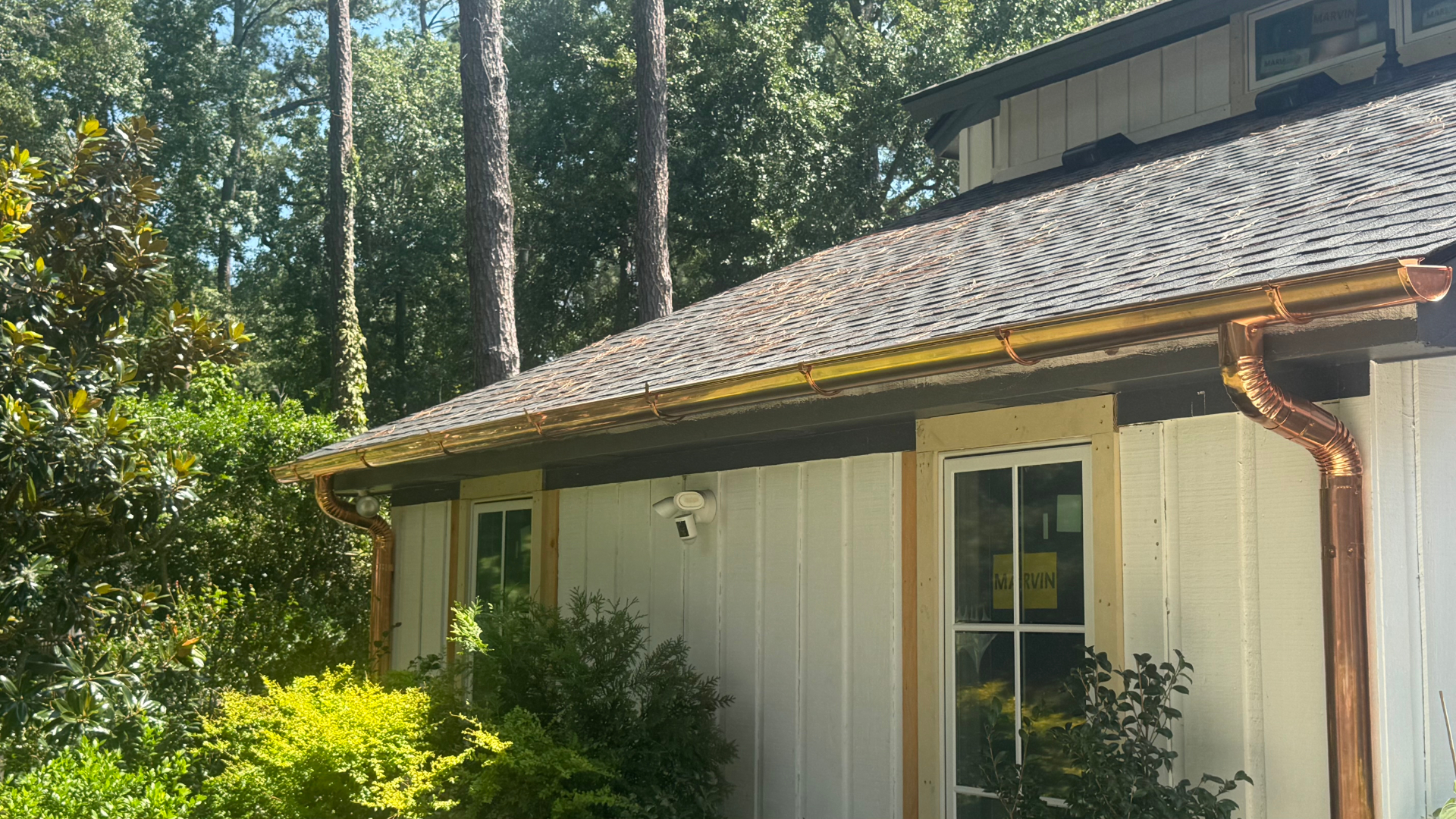
Live Oaks and Pine trees define the Lowcountry landscape, providing shade and character to every neighborhood. They also drop an extraordinary volume of debris. Pine needles, oak leaves, acorns, and small twigs accumulate in gutters within weeks of a cleaning, creating clogs that block water flow and force overflow during the next storm. Regular gutter cleaning and tree trimming services form the first line of defense, keeping the system flowing freely and reducing the risk of overflow, wood rot, and foundation damage. We recommend seasonal cleanings, ideally in late spring and early fall, along with trimming branches back from roof lines to minimize debris accumulation and prevent damage from falling limbs during storms.
This ongoing maintenance is a partnership. Homeowners who stay vigilant, checking gutters after major storms and scheduling cleanings before hurricane season, experience far fewer problems than those who wait until overflow or damage forces their hand. Our 50 years of experience in the Charleston area means we understand local conditions, know which trees cause the most problems, and can recommend a maintenance schedule tailored to your property. Whether you are in Summerville, Mount Pleasant, James Island, or anywhere across the Lowcountry, the next big storm is always on the horizon. Call (843) 998-2888 or request a free estimate today to ensure your home is ready.
Summary
The Lowcountry’s Live Oaks and Longleaf Pines create the canopy that defines Charleston’s visual character, but they also generate year-round debris that clogs gutters faster than in nearly any other region. Pine needles accumulate in dense mats that block downspout openings within weeks, while oak leaves and acorns create layers that trap water and accelerate decay. During spring pollen season, a sticky yellow film coats every surface, binding debris into a cement-like mass that standard rinsing cannot remove.
Regular gutter cleaning is the first line of defense. Clearing gutters at least twice per year, ideally in late spring and early winter, removes debris before it compacts and blocks flow. Tree trimming services keep branches from overhanging roof lines, reducing the volume of leaves and needles that enter the system in the first place. Cutting back limbs also prevents branch damage during hurricane season, when high winds can drive heavy branches through gutters and fascia.
Ongoing maintenance is a partnership between homeowner vigilance and scheduled service. Fifty years of experience working in Charleston, Johns Island, Mount Pleasant, and surrounding areas has shown us that homes with quarterly or semi-annual service schedules avoid the emergency calls that follow sudden storms. Whether you are in Summerville dealing with dense tree cover, West Ashley managing moss and algae growth, or James Island preparing for hurricane season, a proactive maintenance plan keeps water flowing where it belongs and protects the investment you have made in high-capacity gutters and drainage systems.
The next big storm is never far off in the Lowcountry. Preparing your home now with the right systems and regular care means you can watch the rain from your porch instead of watching water pool around your foundation. Call (843) 998-2888 or request a free estimate online to schedule an evaluation before the season turns.